
Middlesex County Warrant Records
Middlesex County warrant records are kept by the Middlesex County Sheriff and the Circuit Court Clerk in Saluda, the county seat. You can search Middlesex County warrant records by name through the state online case system, by visit at the courthouse, or by call to the sheriff's records desk. Most warrant records become public once a warrant has been served and the file returned to the court. Active arrest warrant content may be held back to keep officers safe and the search on track. The right place to start depends on what you need to find.
Middlesex County Warrant Records Overview
Where to Find Middlesex County Warrant Records
The Middlesex County Sheriff's Office is the main law enforcement agency that holds and serves active warrants in Middlesex County. Deputies cover the rural roads, the village of Saluda, Urbanna, and the small river communities along the Rappahannock and the Piankatank. Once a warrant is served and a deputy logs the return, the file moves to the court clerk for the file room. The Middlesex County Circuit Court Clerk holds felony case files at the courthouse in Saluda. The General District Court Clerk holds the misdemeanor and traffic warrant files in the same complex.
For a name search across Middlesex County warrant records, the fastest path is the state case system at eapps.courts.state.va.us/gdcourts/. Pick the General District Court for Middlesex, then run a name lookup. The system shows charges, hearing dates, and case status. For circuit court files, use the circuit court case search. Both tools are free and run by the Office of the Executive Secretary of the Supreme Court of Virginia.
Cases tagged with a capias or a failure to appear charge often link back to a warrant. The portal does not show open arrest warrants by design. For an active warrant check, call the sheriff records desk.
Note: The state case search will not show open arrest warrants in Middlesex County. Call the sheriff for an active warrant check by phone.
Middlesex County Sheriff Warrant Search
The Middlesex County Sheriff is the local agency that serves warrants and runs the jail. The records unit can confirm if a name has an active warrant on file. Some Virginia counties post outstanding warrant lists on the sheriff site. Middlesex does not, so you should call ahead. Bring photo ID if you plan to ask about your own warrant record at the front desk.
If a person is arrested on a Middlesex County warrant, deputies bring the person to a magistrate. The magistrate sets bail and issues a commitment order if needed. From there, the case moves to the General District Court or the Circuit Court for a first hearing. Most arrests in Middlesex County run through the local magistrate first, even when state troopers from the Virginia State Police make the stop.
Under Va. Code § 19.2-76, any sworn officer in Virginia may serve a Middlesex warrant anywhere in the state. So a person with a Middlesex warrant could be picked up in another county and held until Middlesex can take custody.
Middlesex Circuit Court Warrant Records
The Middlesex County Circuit Court Clerk handles felony case files, civil cases over $25,000, and the land record index. The court is part of the 9th Judicial Circuit. Felony warrants tied to indictments or capias orders move into the circuit court file once the case is bound over from general district court. The clerk's office sits at the Middlesex County courthouse in Saluda.
You can request copies of Middlesex Circuit Court warrant records by visit, mail, or fax. Standard copy fees apply. Certified copies cost more. The clerk also keeps the felony case index that you can search in person. The circuit court case search covers most Middlesex County felony files online.
The General District Court in Middlesex County handles misdemeanor cases, traffic infractions, and small civil cases. Bench warrants from missed hearings show up often. The court also holds preliminary hearings for felony cases before they go up to circuit court.
How a Middlesex County Warrant Is Issued
A Middlesex County warrant starts with a sworn complaint to a magistrate. Under Va. Code § 19.2-71, a magistrate or judge weighs the facts and issues a warrant when there is probable cause. The warrant must name the accused, list the offense, and direct an officer to make the arrest. Va. Code § 19.2-72 sets out what the warrant must contain.
Search warrants follow a separate path. An officer files a sworn affidavit under Va. Code § 19.2-54 that lays out probable cause and the place to be searched. The judge or magistrate signs the warrant. The officer then has 15 days to serve it under Va. Code § 19.2-56. Once served, the inventory and return must be filed with the clerk under Va. Code § 19.2-57.
Statewide Tools for Middlesex County Warrant Records
The Virginia Judicial System case search at eapps.courts.state.va.us/gdcourts/ is the main free tool for Middlesex County warrant lookups. You can search by name in the Middlesex General District Court or browse by hearing date. Felony cases live in the circuit court case search.
The Virginia State Police runs a name-based criminal history check on Form SP-167. The fee is $15 per name. Mail the notarized form to Virginia State Police, Civil & Applicants Records Exchange, P.O. Box 85076, Richmond, VA 23285. Details are on the VSP criminal background check page. Forms are at vsp.virginia.gov/services/forms/.
The case search tool below is the front door for most Middlesex County warrant lookups. Visit the case search portal to start a name lookup.
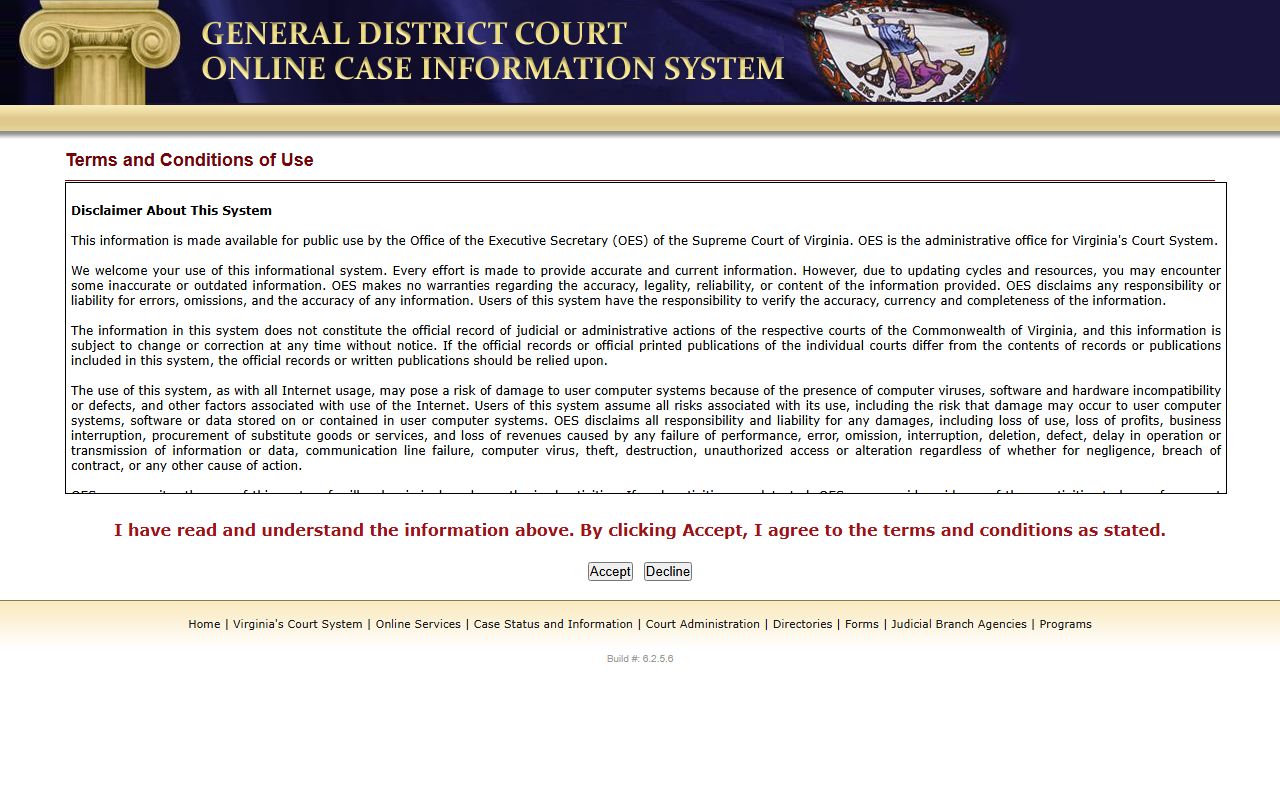
The general district court case search is one of the most-used tools for Middlesex County warrant lookups. Pick the right court from the dropdown, then run a name search.
For people in state prison after a Middlesex County conviction, the Virginia Department of Corrections offender locator shows facility, offense, and projected release date. The Virginia sex offender registry is a free public lookup hosted by the state police.
Federal Warrants Tied to Middlesex County
Middlesex County sits in the Eastern District of Virginia. Federal warrants tied to a Middlesex case run through the U.S. District Court for the Eastern District of Virginia. PACER is the online docket tool for federal cases. The fee is $0.10 per page.
Federal warrants come from a U.S. magistrate judge after a federal complaint or grand jury indictment. The U.S. Marshals Service serves most federal arrest warrants in Virginia.
FOIA and Middlesex Warrant Records
The Virginia Freedom of Information Act, found at Va. Code § 2.2-3700 et seq., gives the public the right to see most Middlesex County warrant records once they are returned to the court. The law has a five-day response rule. Active criminal investigative files get up to 65 working days under Va. Code § 2.2-3706.1.
Public access to court files is also covered by Va. Code § 2.2-3704. The clerk may charge for copies and for staff time on large pulls. You don't have to give a reason for the request.
The Virginia FOIA Advisory Council answers free questions about FOIA practice. Call (804) 698-1810 or email foia@dls.virginia.gov for help.
Note: Search warrant affidavits in Middlesex County can be sealed by court order while a case is open and the search is still active.
Are Middlesex County Warrant Records Public
Yes, in most cases. A Middlesex County warrant becomes a public record once it has been served and returned to the court. Anyone can ask the clerk for a copy. Some parts of the file may be sealed. Juvenile warrant files have their own privacy rules under Va. Code § 16.1-301. Records that name a confidential informant can also be held back.
The full Code of Virginia is at law.lis.virginia.gov. Criminal history dissemination rules are in Va. Code § 19.2-389.