
Search Virginia Warrant Records
Virginia warrant records are court-issued documents that name a person, the charge, and the officer told to make the arrest. You can look up Virginia warrant records through the state online case system, the local circuit court clerk, the sheriff's office, or the police records unit in the city or county where the warrant was filed. The Virginia Judicial System case search lets you check most general district and circuit court files by name. For active warrant lookups, you may need to call the local sheriff or stop by the records desk in person.
Virginia Warrant Records Overview
Where to Find Virginia Warrant Records
Warrant records in Virginia are kept by several agencies. The court clerk holds the file once the warrant is served and returned. The sheriff's office and local police hold the active warrant in the field until it is served. The Virginia State Police runs the Central Criminal Records Exchange, which logs arrests once a warrant has been executed and the person fingerprinted. Each layer holds a different piece of the same case, so the right place to look depends on what you need.
The Virginia Judicial System hosts the main public case search at eapps.courts.state.va.us/gdcourts/. The system covers general district court and juvenile and domestic relations criminal cases, plus most circuit courts. You can search by name, case number, or hearing date. Records show charges, hearing dates, dispositions, and case status. Some warrant data appears in the case detail when the warrant is the charging document. The site is run by the Office of the Executive Secretary of the Supreme Court of Virginia and is free to use.
For criminal history that lists past warrants and arrests, the Virginia State Police criminal background check is the official path. The VSP runs the Central Criminal Records Exchange (CCRE) and answers name-based requests on Form SP-167. The fee is $15 per search, or $20 with a sex offender registry add-on. Mail the form to Virginia State Police, Civil & Applicants Records Exchange, P.O. Box 85076, Richmond, VA 23285. Notarization is required for the requester and the recipient.
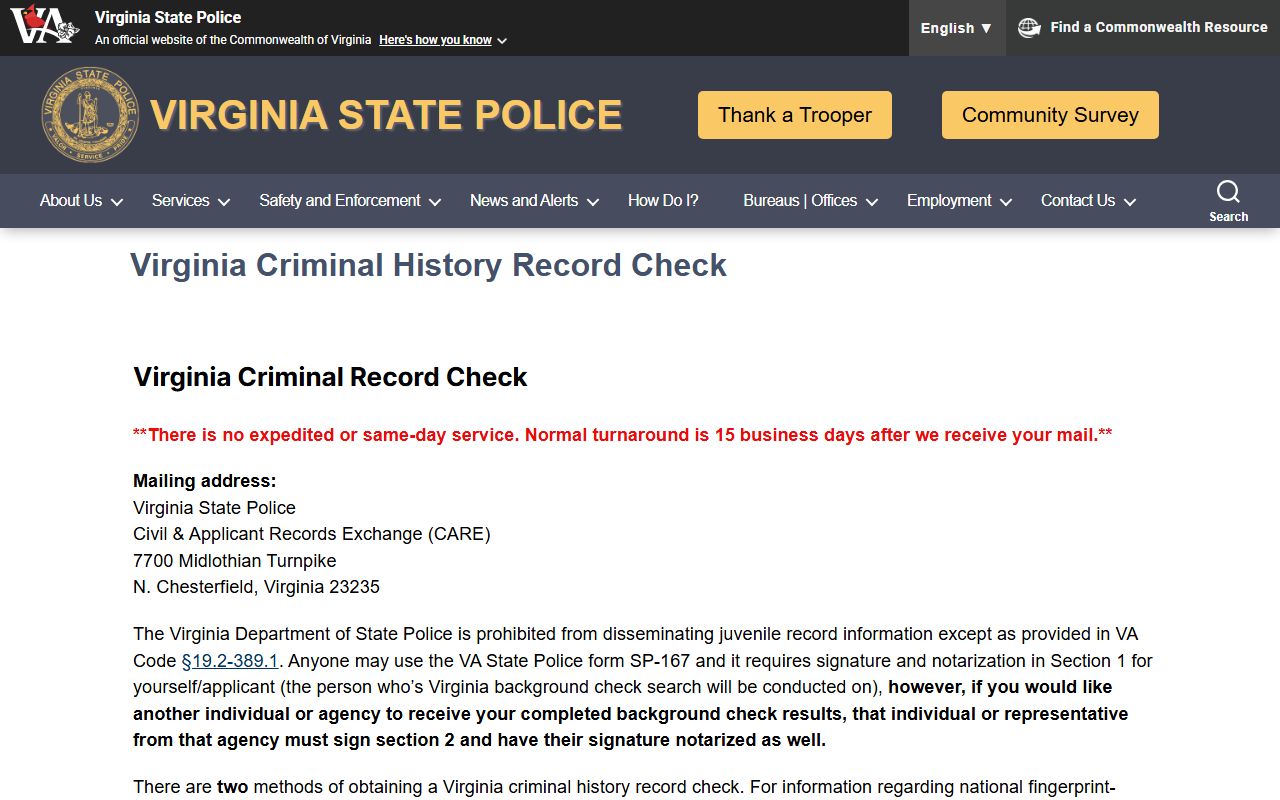
The VSP background page lays out the SP-167 process, fees, and the mailing address used for name-based criminal history requests in Virginia. It also lists the SP-230 form for Virginia employers and the SP-266 form for the sex offender registry. Many requesters use this page as the starting point for any state-level warrant or arrest record check.
Note: Active arrest warrant details are often held back from the public to protect the search. Local police and sheriff offices are the best place to check on a known warrant.
How to Search Virginia Warrant Records Online
The fastest way to check Virginia warrant records is the state case search portal. It is free, runs 24/7, and covers most courts in Virginia. You can search by name in any general district court, then jump into the file for hearing dates, charges, and case outcomes. The case search does not show open arrest warrants by design. It does show capias and bench warrant entries that have been logged by the clerk.
To use the case search, go to eapps.courts.state.va.us/gdcourts/ and accept the terms. Pick the court type, then the city or county. Type a last name and a first name. The system will return a list of cases that match. Click a case for full detail. You can also search by case number if you have one. Cases tagged "capias" or with a "failure to appear" charge often link to a warrant.
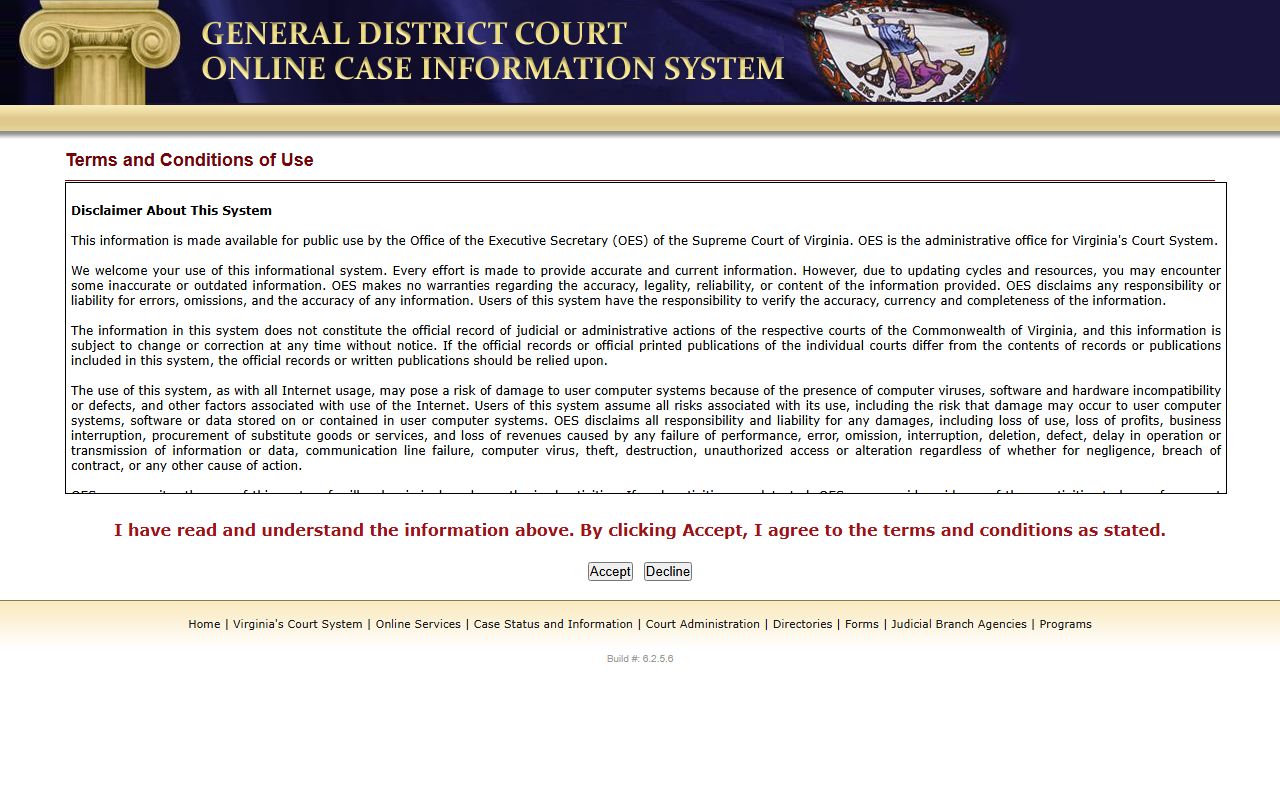
The general district court case search is one of the most-used tools for Virginia warrant lookups. It shows misdemeanor, traffic, and small civil cases by city and county jurisdiction. Use the dropdown to pick the right court, then run a name search to see active and closed case files.
The circuit court case search is a separate tool. It covers felony files in select circuit courts. Felony warrants tied to indictments or capias orders show up here once filed. The Supreme Court of Virginia and the Court of Appeals also run small online dockets at the state level. For most public users, the general district and circuit court tools are enough to find warrant-linked case data in Virginia.
Things you need before searching:
- Full legal name of the person
- Date of birth (helps cut down on false matches)
- City or county where the case may have been filed
- A case number if you already have one
If the case search comes up empty, the warrant may not be entered yet, or the file may be sealed. Reach out to the local court clerk or the police records unit for follow-up. Each court loads data on its own schedule, so very recent warrants may take a few days to show up online.
Types of Virginia Warrant Records
Virginia uses several kinds of warrants. Each one has a job in the criminal court process. The most common is the arrest warrant, issued under Va. Code § 19.2-71 when a judge, clerk, or magistrate finds probable cause that a person broke the law. The warrant names the person, lists the charge, and tells the officer to bring the person before a court.
A bench warrant is issued by a judge when someone fails to show up for a court date. A capias warrant works much the same way and is often used when a person ignores a court order or violates probation. Search warrants are different. They allow law enforcement to enter and search a place or seize property, and they must be carried out within 15 days under Va. Code § 19.2-56.
A Virginia warrant file usually has:
- Name of the accused and any known aliases
- Date of birth and physical description
- Charge and statute cited
- Issuing court or magistrate
- Date the warrant was issued
- Bond amount, if set
- Return of service noting how and when the warrant was served
Most of this content is open to the public once the warrant has been served and returned to the court. Active warrant content can be held back to protect the search and the safety of the officers. Search warrant affidavits become public once the warrant is filed back with the clerk under Va. Code § 19.2-57, which gives officers three days to return the warrant and inventory.
How a Virginia Warrant Is Issued
A Virginia warrant starts with a sworn complaint. Under Va. Code § 19.2-72, a magistrate or judge takes the complaint, hears any witnesses on oath, and weighs the facts. If the official finds probable cause, the warrant is issued. The warrant must name the accused, describe the offense with reasonable certainty, and direct an officer to make the arrest. A felony complaint by a person who is not a sworn officer needs prior sign-off from the Commonwealth's Attorney before a magistrate may sign the warrant.
Once issued, the warrant is logged into the police records system and entered into state and national databases. Va. Code § 19.2-76 says any officer in Virginia can serve a warrant issued anywhere in the state. The officer who makes the arrest must endorse the warrant with the date and return it to a judicial officer with bail-setting power. If the arrest is in a different city or county than the charge, the officer either delivers the person to the home jurisdiction or brings the person before a local magistrate first.
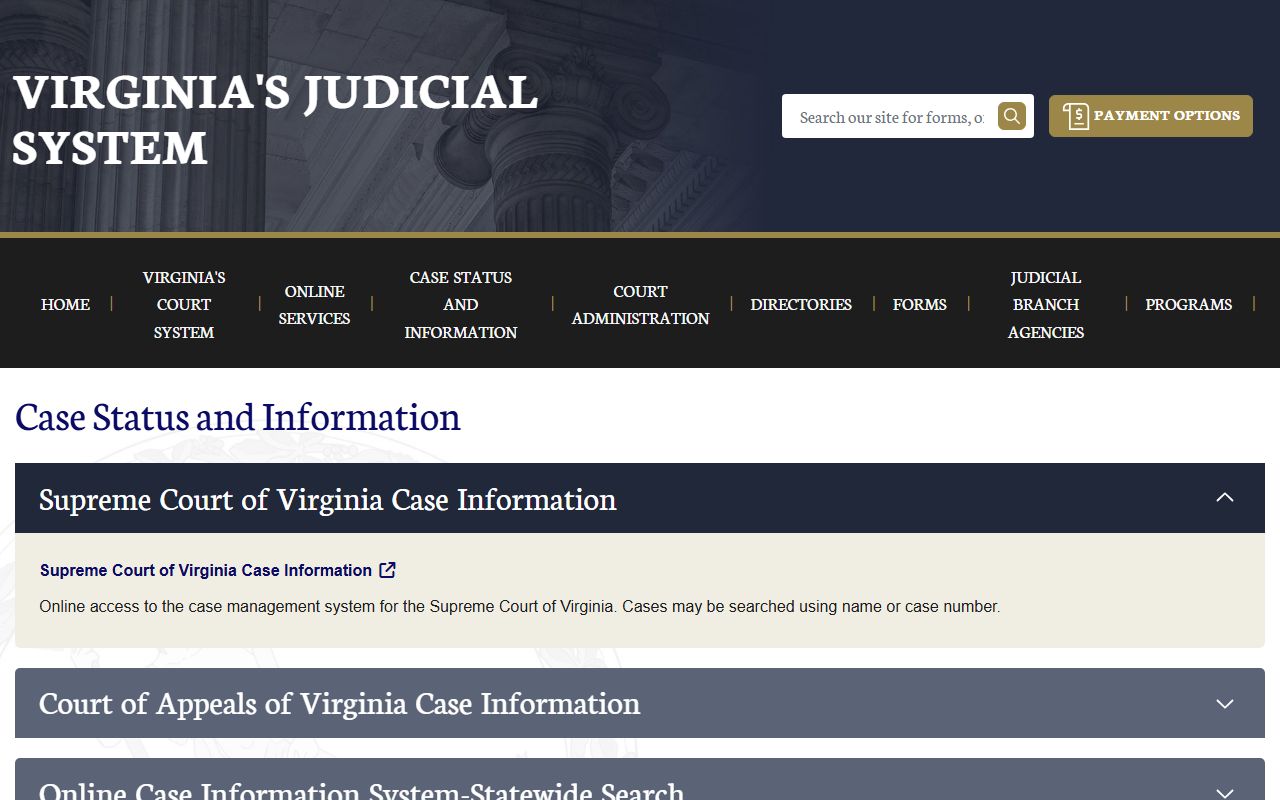
The Virginia Judicial System case information portal is the front door for online court file lookups. The portal is the official tool for checking criminal cases that may include warrant entries, capias orders, and bench warrant filings.
Search warrants follow a separate path under Va. Code § 19.2-54. An officer files a sworn affidavit that lays out probable cause, the place to be searched, and the items to be seized. A judge or magistrate signs the warrant, and the officer has 15 days to serve it. House searches must happen between 8 a.m. and 5 p.m. unless a judge approves a different time for a clear reason.
Statewide Tools for Virginia Warrant Records
Virginia has a few statewide databases that help with warrant and arrest checks. The Virginia Department of Corrections offender locator shows people in state custody. If a person was arrested on a warrant and sentenced to state time, they will be in this system. You can search by ID number or by last name and at least the first letter of the first name. The result shows the facility, the offense, and the projected release date. VADOC inmates are not in city or county jails, so this tool only catches people who already moved into state custody.
The Virginia sex offender registry lets the public search registered offenders for free. The registry runs under Va. Code §§ 9.1-900 through 9.1-918 and is hosted by the Virginia State Police. For a full registry record, you can submit Form SP-266 with a $15 fee, or $8 for a registered nonprofit. The registry feeds back into criminal history checks and is often paired with a name search on Form SP-167.
For federal warrants tied to a Virginia case, you can use PACER through the U.S. District Court for the Eastern District of Virginia or the Western District of Virginia. PACER charges $0.10 per page for case documents. The Eastern District covers the Hampton Roads, Richmond, Newport News, and Alexandria divisions. The Western District covers Roanoke, Charlottesville, Lynchburg, Danville, Harrisonburg, Big Stone Gap, and Abingdon.
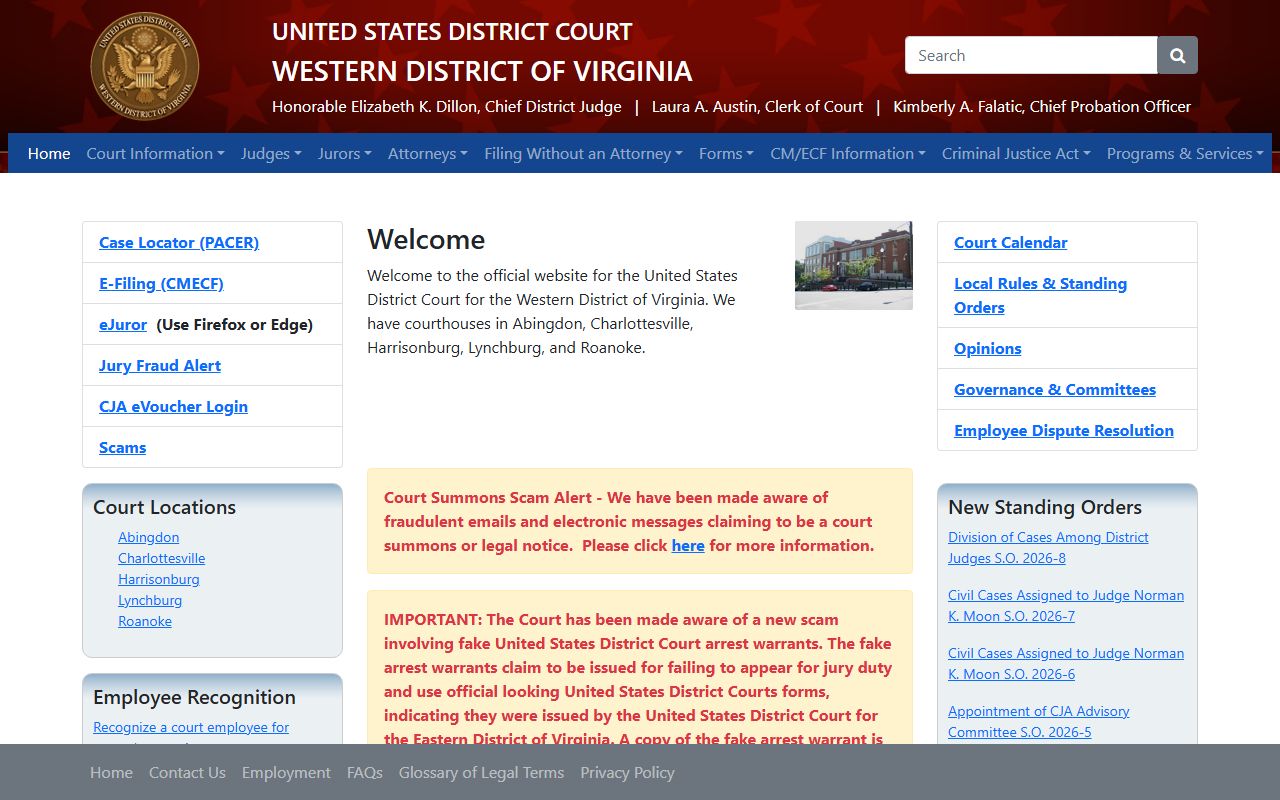
The Western District of Virginia federal court site gives docket access, court forms, and PACER login info for federal criminal cases. Federal warrants in central and southwest Virginia run through this court, and PACER is the main online file lookup tool for federal records.
The state legal code for Virginia is online at law.lis.virginia.gov. Statute pages link to the full text of every section in Title 19.2, the criminal procedure title that controls warrant practice in Virginia. The Code is the source for warrant rules, search and seizure rules, and the state's FOIA rules in Title 2.2.
Virginia FOIA and Warrant Records
The Virginia Freedom of Information Act, found at Va. Code § 2.2-3700 et seq., gives the public the right to see records held by Virginia public bodies. That includes most warrant records once they are returned to the court. The law has a five-day response rule. A public body must answer within five working days, with a possible seven-day add-on if more time is needed. Active criminal investigative files get up to 65 working days under Va. Code § 2.2-3706.1.
The Virginia FOIA Advisory Council answers free questions about FOIA rights and limits. They serve both requesters and public bodies. Call (804) 698-1810 or email foia@dls.virginia.gov for help. The Council is part of the Division of Legislative Services and gives advisory opinions, training, and written guides on Virginia FOIA practice.
Search fees can be charged. A public body may bill for staff time and copy cost, but not general overhead. If the cost will run over $200, the body can ask for a deposit before doing the work. You don't have to give a reason for your FOIA request, and you don't have to be a Virginia resident to file one for most records.
FOIA exemptions that often touch warrant records include open criminal investigations, confidential informants, and personnel records. Juvenile records under Va. Code § 16.1-301 have their own access rules and are mostly closed to the public.
Are Virginia Warrant Records Public
Yes, in most cases. Once a warrant is served and the file is returned to the court, the record is open under the Virginia Public Records Act and the FOIA rules in Va. Code § 2.2-3704. Anyone can ask the clerk for the case file. The clerk will pull the file and let you read it on the spot or make copies for a small fee.
Some parts of a warrant case file are not open to the public. Search warrant affidavits can be sealed by court order while a case is open. Files involving juveniles have their own privacy rules. Records that name a confidential informant or that may put a witness in danger can be held back. Court rulings on what to seal are made case by case and depend on the facts.
Most Virginia warrant records are open to the public after service. Active warrants and sealed affidavits may have limited or no public access.
Browse Virginia Warrant Records by County
Each Virginia county has its own sheriff and circuit court clerk that handle warrant records. Pick a county below to find local contact info and warrant search resources for that area.
Warrant Records in Major Virginia Cities
Virginia's 39 independent cities run their own police departments and circuit courts. Pick a city below to find local warrant search tools and records contacts.